

Living abroad brings incredible opportunities alongside unexpected challenges. For Nordic expats in Thailand, knowing where to turn for mental health and wellness support is as important as finding a good doctor.
Rehab centers in Thailand have evolved into world-class facilities offering internationally accredited treatment for addiction, burnout, depression, and anxiety—challenges that remain relevant even in paradise.
This guide covers key factors for choosing treatment and highlights seven leading facilities serving the international community.
How to Choose the Right Rehab
Selecting a rehabilitation or mental health center requires careful evaluation, especially when you’re far from home and navigating a different healthcare system than the comprehensive public services available in Scandinavia.
Match treatment to your needs: Different facilities follow different models—12-step programs, evidence-based therapy (CBT, DBT), holistic wellness, or combinations. Nordic individuals often prefer pragmatic, evidence-based approaches rather than purely spiritual or alternative methods.
Factor in budget considerations: Thailand offers excellent value, with facilities typically charging 50-70% less than comparable private treatment in Scandinavia. Consider the costs of rehab in Thailand carefully: base prices, visa extensions, medications, optional therapies, and family programme participation. Many facilities work with international insurance providers.
Evaluate treatment duration: Standard programs run 28 days, but many issues benefit from longer treatment (60-90 days). Consider whether the facility offers flexible timelines and what happens if you need to extend.
Assess aftercare and support: What happens after you complete the program? Quality facilities provide robust aftercare, including online support groups, follow-up sessions, and alumni networks—crucial when you’re living abroad without your usual support system from back home.
Consider family involvement: Can your family participate remotely via video calls? Do they offer family therapy sessions? This matters when your loved ones are back in Scandinavia and want to support your recovery.
Check practical logistics: Consider location relative to airports (for family visits), visa assistance for extended stays, and whether the facility has staff experienced with Nordic/European clients who understand Western communication preferences.
Why contacting centres directly helps: Reputable facilities offer detailed consultations to assess your needs and explain their approach. Ask about accreditations (look for CARF International, JCI), staff qualifications (Western-trained professionals), and outcome statistics. The right centre demonstrates transparency and welcomes your questions.
The 7 Best Rehab Centres in Thailand

1. The Dawn Wellness Centre and Rehab Thailand
Located on peaceful riverbanks in Chiang Mai, The Dawn holds the distinction of being Asia’s only CARF-accredited rehabilitation facility—the same rigorous standard required for top facilities in the US and Europe, ensuring quality that meets Nordic expectations for healthcare excellence.
The center specializes in both addiction treatment and mental health conditions (depression, anxiety, trauma, executive burnout), offering separate specialized tracks delivered by internationally trained doctors, psychiatrists, and therapists educated in the UK, US, and Australia.
Their approach combines evidence-based Western therapies (CBT, DBT, trauma-focused therapy) with wellness practices like mindfulness meditation, therapeutic yoga, and traditional Thai massage—practices that align with the preventive healthcare mindset common in Nordic countries. All modalities are scientifically validated for stress management and developing healthy coping mechanisms.
What distinguishes The Dawn for expats is their comprehensive support infrastructure: medical detox on-site with 24/7 supervision, dedicated trauma program, low client-to-staff ratios (maximum 30 clients) ensuring personalized attention, and their Step Down Programme that helps bridge intensive treatment with independent living—particularly valuable for expats needing gradual reintegration support while maintaining professional backup.
The facility’s relapse warranty for qualifying clients who complete 12-week programs demonstrates confidence in their treatment outcomes—addressing the practical Nordic concern about value for money by offering an additional 28 days of residential treatment at no cost if relapse occurs within one year.
Their comprehensive aftercare includes online support groups (minimum 10 weeks free), ongoing therapy access, and an active alumni network—essential for expats who won’t have easy physical access to the facility after treatment ends.
Conditions treated: Substance addictions, behavioral addictions, mood disorders, complex trauma and PTSD, executive burnout
Strengths: CARF International accreditation, 24/7 medical supervision, comprehensive trauma treatment, highly qualified international team, robust aftercare including online support, flexible program lengths (3-6 months available), Step Down programme, relapse warranty
Best for: Those seeking internationally accredited treatment with comprehensive clinical care, trauma-focused recovery, or extended programs with structured reintegration support.
Learn more about The Dawn’s programs →
2. One Step Rehab
Based in northern Thailand, One Step combines Western psychological treatment with fitness integration, including Muay Thai and outdoor activities. Their approach suits fitness enthusiasts wanting active recovery programs. The facility emphasizes comprehensive fitness programming, dopamine-optimizing nutrition, and nutraceutical therapy alongside traditional psychological treatment—addressing both biochemical and behavioral aspects of addiction in ways that appeal to those interested in evidence-based, physiological approaches.
Conditions treated: Drug and alcohol addiction
Strengths: Comprehensive fitness facility, dopamine diet nutrition programme, nutraceutical therapy, innovative fitness-therapy integration
Best for: Those wanting comprehensive fitness integration in their recovery program
3. The PARC Recovery
Located in southern Thailand, The PARC combines Eastern and Western philosophies with emphasis on practical life skills and vocational training. The approach suits those wanting spiritual elements integrated with pragmatic recovery skills—balancing holistic wellness with practical preparation for reintegration. Their focus on career planning and life skills development ensures clients leave prepared not just for sobriety but for successful independent living, which resonates with the Nordic emphasis on self-sufficiency and practical outcomes.
Conditions treated: Addiction, trauma, depression, anxiety, professional burnout
Strengths: Holistic East-West approach, practical life skills development, vocational training
Best for: Individuals seeking holistic East-West approaches with practical life skills development
4. Siam Rehab
Set on 30 acres of jungle gardens outside Chiang Rai, Siam Rehab appeals to active individuals with its fitness-focused approach. The program emphasizes physical wellness alongside psychological recovery—an approach that resonates with Scandinavians’ typically active lifestyles. Their unique offerings include Muay Thai training with former champions and Thailand’s only equine therapy programme, using horses to develop trust, emotional regulation, and communication skills through hands-on experiential learning.
Conditions treated: Substance addiction, co-occurring disorders, behavioural addictions
Strengths: Fitness-focused approach including Muay Thai boxing, equine therapy programme, extensive outdoor facilities, 8-12 week program options
Best for: Active, outdoorsy individuals wanting comprehensive treatment with strong physical fitness components
5. The Orchid Recovery Centre
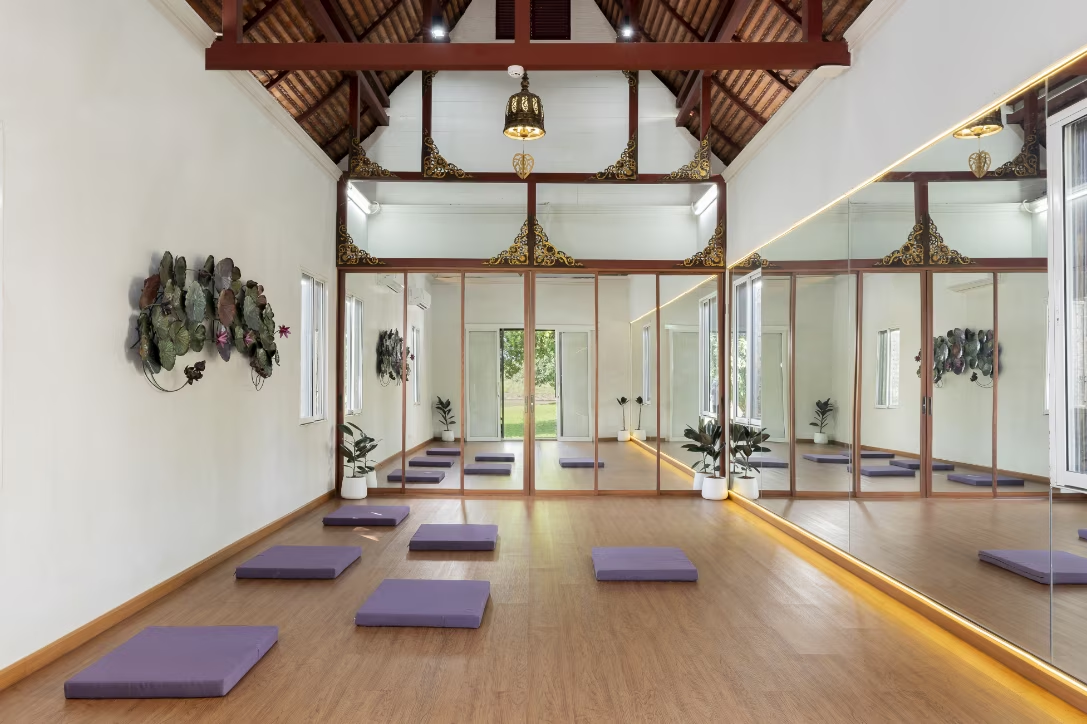
Also in Chiang Mai, The Orchid offers more affordable luxury rehabilitation with emphasis on holistic, client-centered treatment. The tranquil setting features private rooms, therapeutic gardens, and wellness amenities including yoga studios—appealing to those who appreciate Scandinavian values of nature connection and holistic health. Their comprehensive family therapy programme helps address relationship healing across distances, with options for remote family participation.
Conditions treated: Substance addictions and behavioral addictions
Strengths: Individualised psychiatric care combined with holistic approaches, comprehensive family therapy programme with remote options, affordable luxury positioning
Best for: Those seeking quality treatment at more accessible price points in peaceful surroundings
6. Alpha Sober Living
A men’s sober living house in Chiang Mai taking an innovative approach by treating addiction as a metabolic disorder. Their Dopamine Die program uses personalized nutrition, functional medicine, and metabolic coaching—a science-based, evidence-driven approach appealing to those interested in functional medicine interventions. The Recovery Zones methodology provides structured continuing care, offering affordable post-rehabilitation support for men who have completed primary treatment.
Conditions treated: Substance dependencies, metabolic health issues, co-occurring disorders
Strengths: Personalised metabolic health coaching, body-based therapies, affordable continuing care, authentic cultural immersion
Best for: Men seeking body-based, functional medicine approaches to addiction recovery, those needing post-rehabilitation support
7. Phuket Island Rehab
For those who prefer coastal settings, this facility operates in quieter Phuket areas away from tourist zones. Their 28-day program includes fitness training, nutritional counseling, and water-based therapies alongside traditional treatment—appealing if you thrive near the ocean. The peaceful island location offers therapeutic benefits while remaining accessible to Phuket’s international-standard medical facilities.
Conditions treated: Substance addiction
Strengths: Peaceful island location, integration of Thai wellness practices, water-based therapy options
Best for: Those preferring island recovery in peaceful settings
Rehab in Thailand – Commonly Asked Questions
Can I detox in Thailand before attending rehab?
Yes, several facilities offer detox as a standalone service. However, you may want to consider inpatient Thai rehab centres that already offer medically supervised detox as part of their treatment programmes.
Most reputable centers in Thailand, like The Dawn, offer onsite detox services that enable smooth transition into therapy. They employ qualified medical professionals who ensure your safety and comfort during withdrawal — a safer approach than attempting detox independently.
Is international rehab expensive?
Thailand offers exceptional value compared to private treatment in Scandinavia. While costs vary based on treatment comprehensiveness and accommodation quality, expect to pay US$5,000-US$20,000 for 28-day programmes, including accommodation and meals, typically 50-70% less than comparable private facilities in Nordic countries.
This cost difference stems from Thailand’s lower operational expenses while maintaining international treatment standards and Western-trained staff. Most facilities offer all-inclusive pricing covering medical supervision, therapy sessions, activities, and amenities.
How much does rehab in Thailand cost?
Entry-level programs start around US$5,000 per month, while premium facilities range from US$15,000 to US$20,000.
Costs depend on facility quality, accreditation status, program length, and services offered. However, Thailand’s lower operational costs enable more accessible options compared with Western countries while maintaining international standards.
Most centers offer all-inclusive packages covering treatment, accommodation, meals, and activities. Some facilities provide payment plans or work with insurance providers.
Do I need a visa for rehab in Thailand?
Most nationalities receive a 30-day visa on arrival in Thailand, with extensions available.
For longer programmes, rehab centres typically assist with visa arrangements, including medical visas for extended treatment. Always confirm current requirements with your chosen facility.
link