
MANTON — From bandages and flu shots to counseling and referrals, Cadillac-area students can find health care just down the hall.
The school-based centers, called Adolescent Health and Wellness formally, are wrapping up renovations this year as demand for their services grows. It’s part of the state’s investment to combat rising rates of anxiety and depression among kids and improve health care access, which have since turned simple nurse’s offices into broader service hubs.
Operated by District Health Department 10, the centers provide physicals, walk-in evaluations, immunizations, mental health therapy and more — all at no cost to families.
Wexford County’s largest site, inside Cadillac High School, can provide ongoing treatment for illnesses and injuries directly. Smaller centers in Manton and Mesick handle everyday needs and refer more complex cases to Cadillac or a primary care provider.
The upgrades — like new walls that add privacy in Manton and a dedicated waiting room in Mesick — are funded through recent state grants. Officials say the changes make care more accessible while ensuring students aren’t left waiting until an illness sends them to the ER.
“When kids don’t have resources to get their illnesses and issues taken care of early on, we end up seeing them happen to go to the emergency room,” said Katy Bies, District Health Department 10’s school health director.
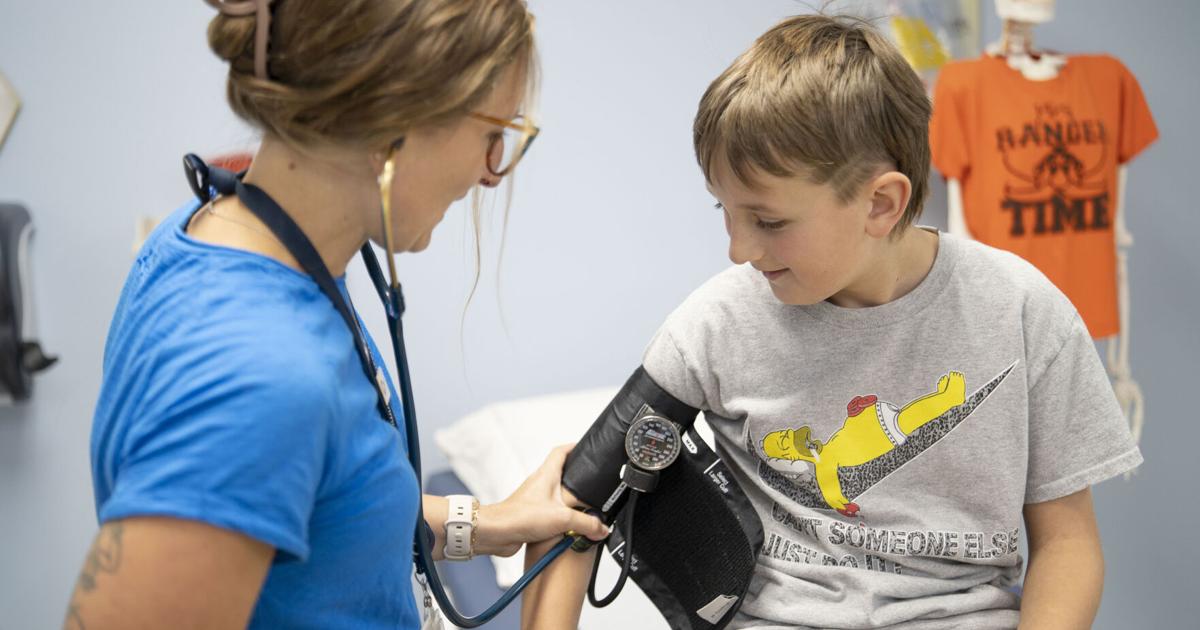
At Manton’s Wellness center, nurse Jessica DeRuiter sees anywhere from four to 20 students a day. While many just need a bandage, some come in with coughs, playground concussions or broken bones. With parent consent, she can give students additional care, like a physical exam during the summer and age-recommended immunizations like their flu shot.
An important part of the center’s offerings come from their connections to resources for financial assistance, reproductive health and primary care referrals.
“A lot of typical school nurses see kids, provide education and Band-Aids,” DeRuiter said. “In this role, I can say, ‘What are your needs at home?’ and connect them to the resources within the health department so they can have their needs met — not just at school, but in the community.”
Since 2010, all three wellness centers have operated through state grants that allow them to serve adolescents aged 10 to 21 as long as they’re Wexford County residents, Bies said. Last year, Manton and Mesick’s centers received an additional grant that provides services to K-12 students within the district.
And recently, Michigan’s Department of Health and Human Services awarded grants to centers across the state for renovations that are either completed or near completion in many schools. Manton’s wellness center now has an additional wall that Bies said increases patient privacy.
Renovations to Mesick’s center — including a new doorway and waiting room — will be completed soon. Students before needed to walk in through the library before an appointment, Bies said.
DeRuiter’s son, Harvey, is in sixth grade at Manton Middle School. He showed the Cadillac News what a student’s appointment is like — getting called down at a scheduled time, ringing a virtual doorbell in the waiting room when they’re ready for treatment, and sitting down at the exam table for the check-up.
Harvey DeRuiter provided an example common among students in warmer months: heat exhaustion. Manton Consolidated Schools doesn’t have air conditioning in every classroom, Jessica said, which can cause some students to feel sick.
“Say I’m getting a headache and I have a fever,” Harvey DeRuiter said. “I’d say I’m getting really hot, she’d feel my forehead, and then she’d put the (heart rate and temperature) monitor on me.”
It’s not uncommon for students to come into the office with symptoms of stress and anxiety mistaken for illness, DeRuiter said — it’s why the center’s counselor is so important.
“They’ll come in for a stomach ache and then it turns out that they have a lot of issues at home,” DeRuiter said. “It’s providing resources to a lot of kids — a lot of low-income rural families. And some just come in because they need a snack.”
Unlike a traditional school counselor, students can be referred to Manton Adolescent Wellness Center mental health therapist Jamie Lareau for sessions to address personal problems that don’t have to involve academics.
“Children go through a lot of anxiety at school — or depression or bullying,” Lareau said. “There might be struggles at home that’s affecting behavior at school.”
Awareness for mental health needs have risen since the COVID-19 pandemic, Bies said — it’s why the state has invested millions into mental health resources for students.
Between 2018 and 2023, over 1,300 mental health professionals (including 401 counselors) have been added to Michigan schools, according to Department of Education data.
Harvey DeRuiter said his mom and the wellness center are popular among students in Manton.
“I like having my mom as a nurse,” he said. “After other people go down here, they’re like, ‘Your mom’s really nice.’”
And Jessica DeRuiter said the position is a great change of pace after previous roles in emergency rooms and hospitals.
“This is my second year in this position, and I’m definitely more comfortable here now,” DeRuiter said. “It’s a great school. It’s a great community.”
For wellness center information and appointments, visit dhd10.org.
Daniel Schoenherr’s position is funded through Report for America and local fund-raising. To help continue local reporting please consider contributing to the Cadillac Area Community Foundation’s Local Journalism Fund at www.justgiving.com/cadillacareacommunityfoundation.
link